


AI-powered energy intelligence company etalytics is addressing a critical global challenge: optimizing industrial energy use at scale while driving measurable sustainability impact. For sectors like data centers, chemical and pharmaceutical production facilities, and automotive manufacturing, growing complexity and stricter energy regulations have outpaced the capabilities of traditional energy management systems.
etalytics recently closed a €16 million Series A to address this problem with real-time, AI-driven energy optimization. With this funding, etalytics is expanding into North America, scaling delivery capabilities across Europe and Asia, and advancing their flagship platform etaONE®.
M12’s investment in etalytics was driven by the company’s potential to transform how some of the world’s most energy-intensive industries operate. We’re excited to support the team as they expand internationally and bring next-generation energy intelligence to data centers, manufacturing, and beyond.
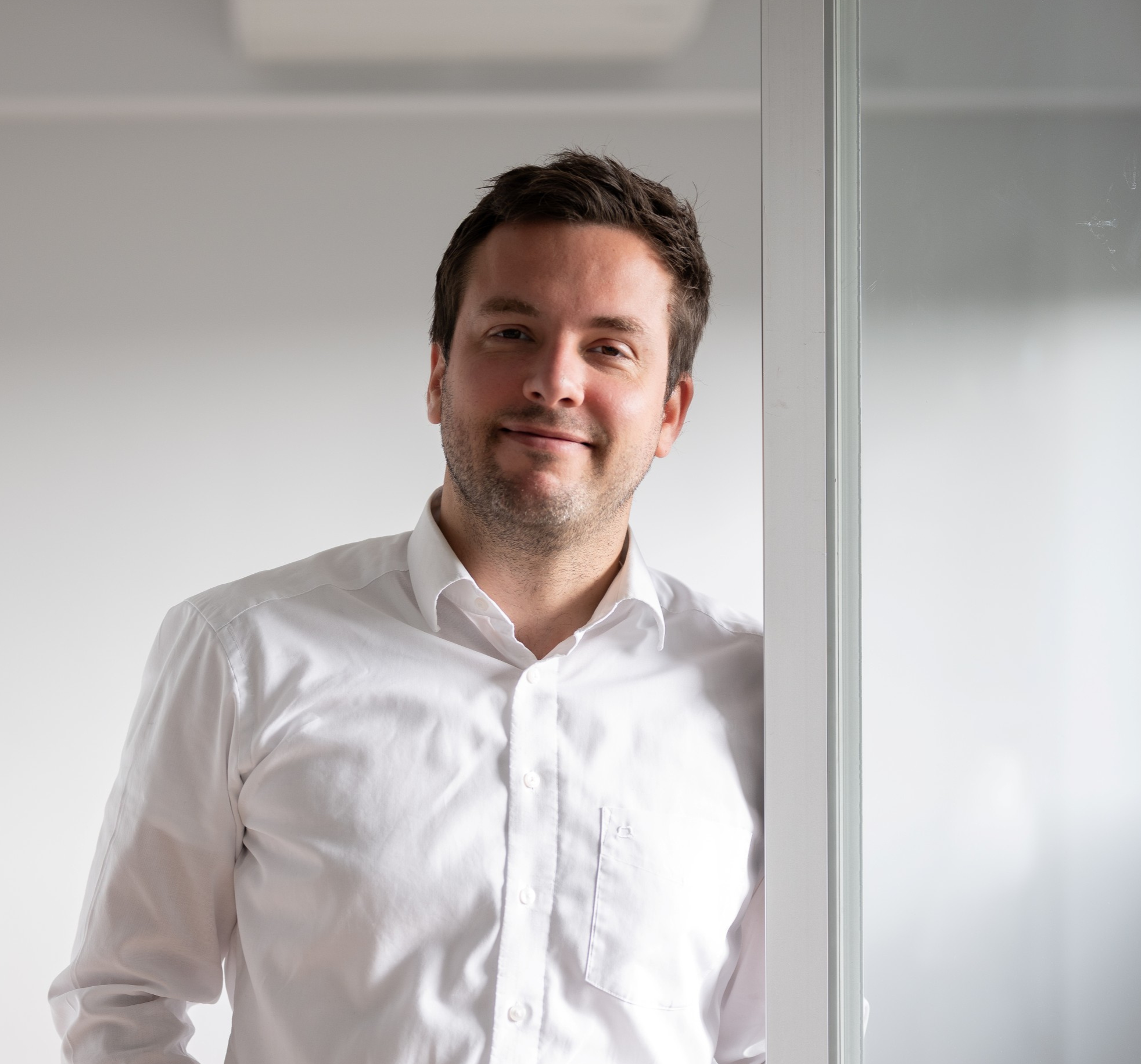
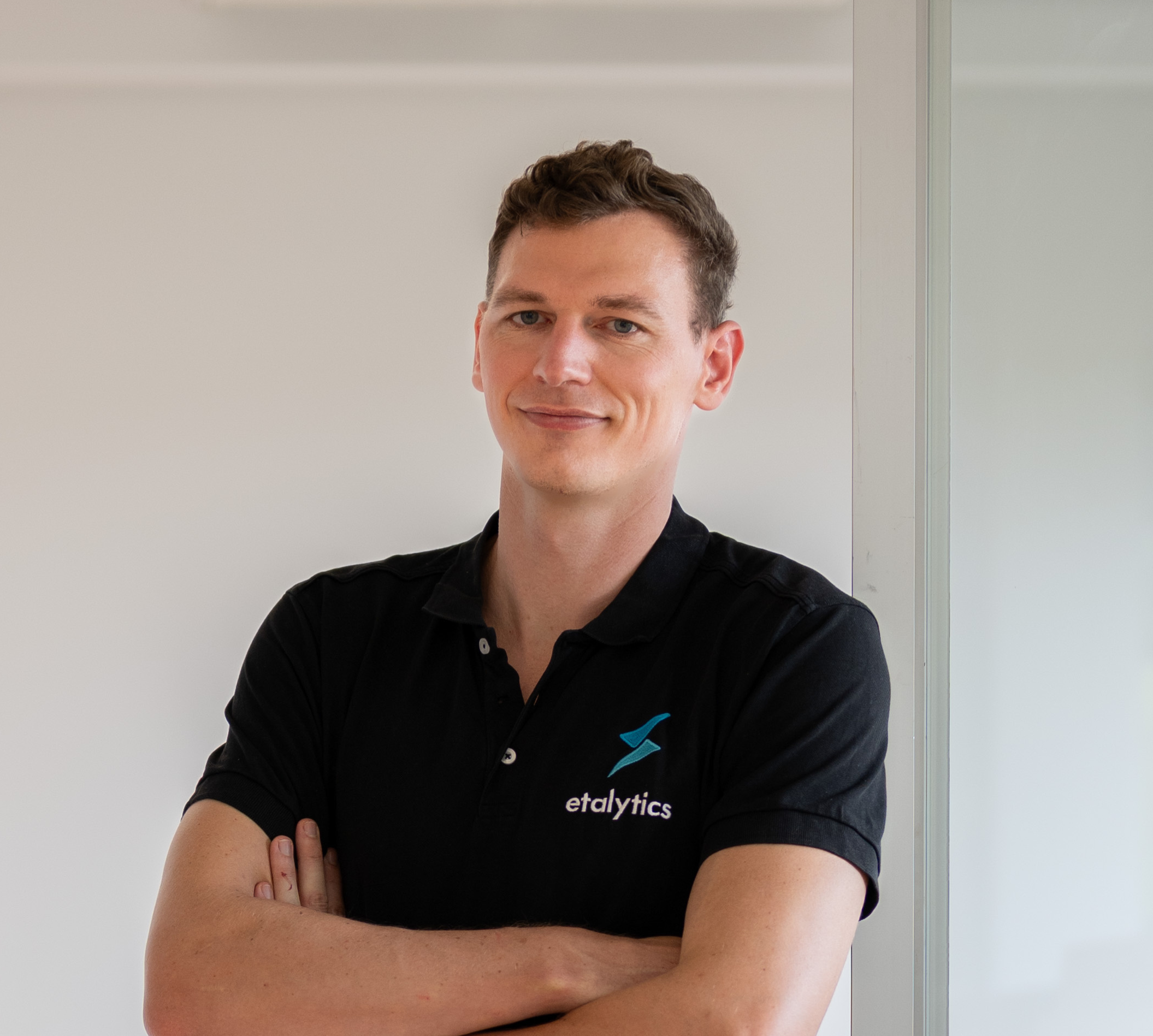
In this edition of Founders Feature, we connected with two of etalytics’ cofounders: Dr. Niklas Panten, CEO and Dr. Thomas Weber, CSO. Follow our Q&A below.
What problem were you trying to solve when you founded your company?
Niklas: We kept running into the same paradox: data centers and industrial sites are packed with sensors, meters, and control systems – yet some of the most critical energy systems are still operated almost “by feel.” During our PhD research in the “ETA Factory” – a real-world research factory for energy-efficient production – we also learned a simple but uncomfortable truth: real efficiency only happens when you think holistically. Instead of optimizing single components or machines in isolation, you must look at the big picture and think in cross-linked systems.
But the more holistically you design and operate energy systems, the more complex they become: multiple energy sources, interacting subsystems, dynamic internal and external influences (such as weather but also volatile energy markets), new hardware for heat recovery, dynamic operating modes. We saw this both in large industrial plants and in our own research factory. The result was always the same:
- significant inefficiencies and wasted energy
- high effort for maintenance, energy management, analysis, and reporting
- manual, error-prone “optimization” just to stay compliant and keep things running
We founded etalytics to make that complexity manageable instead of overwhelming. Building on our research, we developed data- and AI-driven methods for automatic system assessments and dynamic control optimization, so that even highly efficient, multi-energy systems can be operated simply, safely, and continuously at their best point. When we saw how strongly industry partners wanted to apply these solutions in real plants and data centers, turning this research into a company became the obvious next step.
What has been the biggest challenge you’ve faced so far, and how did you overcome it?
Thomas: Our biggest challenge has been building trust in mission-critical environments. When you tell a data center operator that your software will touch the cooling system that keeps thousands of servers alive, the default answer is: “Nice idea. Now prove it. Ten times.”
We overcame this in three ways:
- Start small, then scale the impact.
We began with tightly scoped pilots where our system only advised operators instead of directly controlling equipment. Once we could show consistent savings and stable operation, we gradually increased the level of automation. - Be radically transparent.
Our platform doesn’t just say what to do; it explains why. We try to expose the data, the logic behind, and the constraints so that engineers and operators can sanity-check our recommendations instead of feeling like they’re dealing with a black box. - Obsess over reliability.
We treated reliability and fail-safes as product features, not checkboxes. That mindset (as much as the algorithms) helped us win over customers who are used to thinking in terms of uptime, redundancy, and risk mitigation.
Over time, results spoke louder than slide decks. Once a customer sees 30–50% savings on the electrical power for cooling without compromising reliability, the conversation changes completely.
Can you share an example of how your team has collaborated to solve a tough problem?
Thomas: One good example was an early deployment in a large colocation data center. On paper, the site looked “standard”: chillers, pumps, cooling towers, a BMS – nothing exotic. In reality, every subsystem had its own quirks, undocumented overrides, and historical “hotfixes” that made the actual behavior very different from the drawings.
Instead of treating it as “just a controls problem” or “just a data problem,” we pulled together a cross-functional pod:
- Data scientists and optimization experts to adapt our algorithms to messy, real-world data
- Controls engineers to understand the actual control logic and constraints on site
- Software engineers to turn quick models into robust, maintainable product features
- Customer success and the operator’s own engineering team to validate assumptions and edge cases
We spent time on site with the operations team – walking the plant room, checking sensors, and reconciling theory with reality. Within a few iterations, the team managed to build a digital twin that reflected how the system actually behaved, not how it was drawn. That model then became the foundation for optimization.
The result was not just impressive savings; it also changed the way the customer’s own engineers viewed their plant. They went from “Let’s not touch it if it’s running” to “Let’s see what else we can optimize together.” That mindset shift was only possible because the teams worked as a single unit rather than as separate vendors and operators.
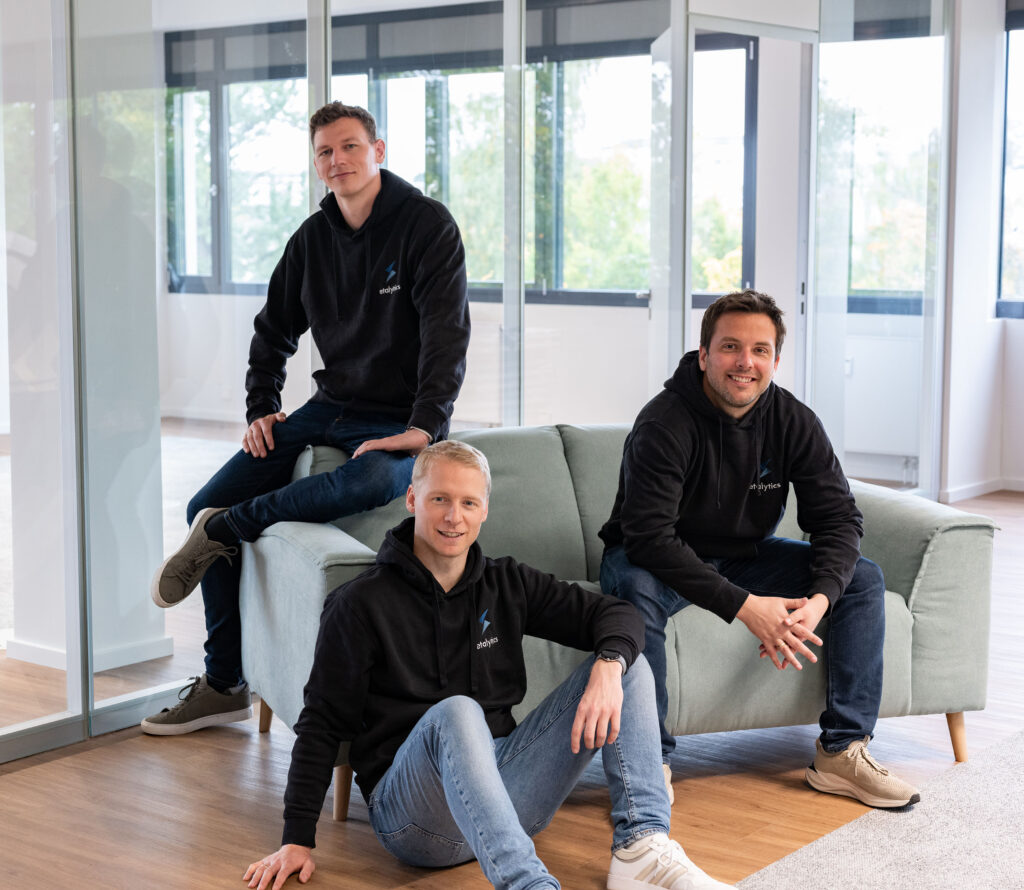
etalytics’ cofounders (from left to right): Dr. Thomas Weber, Björn König, and Dr. Niklas Panten
What are your plans for scaling the company?
Niklas: We think about scaling along three axes: markets, product, and partnerships.
- Markets: We’re doubling down on data centers – where the urgency and impact are highest – while expanding our footprint in other energy-intensive industries like chemicals/pharma and automotive. In parallel, we’re building out our international presence, especially in the US, where the combination of energy prices, energy and power limitations, and sustainability commitments creates strong tailwinds.
- Product: Our roadmap focuses on evolving from individual projects to a scalable platform model. This approach enables an expanded set of pre-configured use cases, streamlined onboarding processes, and enhanced self-service functionalities for both partners and customers. The objective is to transition deployments from bespoke engineering efforts to seamless integrations within a dedicated operating system for energy systems. In addition, we are continually introducing new use cases to increase the value of our energy intelligence platform, supporting AI-driven solutions in energy management, condition monitoring and predictive maintenance, energy system scenario simulation, and retrofitting applications.
- Partnerships: We’re investing heavily in an ecosystem of OEMs, integrators, and technology partners. Many customers already trust these partners with their infrastructure – so enabling them with our platform is a force multiplier. The goal is clear: make etalytics the default intelligence layer that sits on top of cooling and energy infrastructure, regardless of who built the hardware.
What has been your strategy for acquiring customers?
Thomas: Our strategy has been a mix of depth over breadth and proof over promises:
- Lighthouse projects: We focused early on a few highly visible, demanding customers who operate complex sites and care deeply about efficiency and reliability. Success there created case studies and references that speak directly to the concerns of other operators.
- Industry ecosystems: We’re active in data center and energy communities – industry associations, working groups, and specialist events. We try to contribute expertise, share real performance data, and help shape the standards that will govern energy-intensive operations.
- Land and expand: We usually start with one site, one system, or one use case. Once value is proven – both in terms of energy savings and operational comfort – we expand to other sites, additional systems, or new use cases like predictive maintenance or demand-side flexibility.
- Thought leadership: A lot of our inbound interest comes from being very open about our methods: how digital twins can work in practice, how to de-risk AI in critical infrastructure, how to turn energy data into actual decisions. When customers feel you’re teaching them something useful even before they sign, trust builds much faster.
What advice would you give to someone who is just starting out in the startup world?
Niklas: A few things we wish someone had hammered into us even more strongly:
1. Take care of your energy, not just your metrics.
Startups are marathons disguised as sprints. Your personal sustainability (e.g. sleep, health, support network) is as real a constraint as your runway. Ignore it, and everything else eventually breaks.
2. Pick a problem where the world is already moving.
It’s hard enough to build a company; don’t also fight macro trends. Regulation, customer pressure, and economics should be pushing in your direction, not against you.
3. Talk to users until you’re uncomfortable.
You can’t out-think the market from behind a laptop. Show prototypes early, ask naive questions, and let customers contradict your assumptions. Reality will always be messier and more interesting than your initial deck.
4. Build trust before you build scale.
In B2B, reputation compounds. Do the unscalable things – custom support, on-site visits, late-night debugging – for your early adopters. Those relationships will open doors, even years later.
5. Stay stubborn on the mission, flexible on the path.
Your vision should be stable; your roadmap should not. Be willing to change features, pricing, or even your ideal customer profile as you learn – but keep your north star clear for yourself and your team.
What legacy do you hope to leave through your work?
Niklas: We’d like etalytics to be remembered for proving that efficiency can be a core system property, not just an afterthought. If, in ten or twenty years, it’s considered normal that large energy systems run with AI-driven optimization as standard infrastructure, we’ll feel we’ve done our job.
On a climate level, we want to make a measurable dent in global energy use and emissions – starting with data centers, pharma/chemical and automotive plants and expanding far beyond. On a human level, we hope we’ve inspired a generation of engineers, operators, and founders to see sustainability not as a constraint, but as a playground for innovation where you can build strong businesses by doing the right thing at scale.